One Maintainer’s React Commit Fixed a Twenty-Year Browser Spec Ambiguity
In late 2025, a single line of code changed the way every major browser handles a fundamental web interaction. The commit, merged into React 19 by core maintainer Sebastian Markbåge, addressed a twenty-year ambiguity in the W3C DOM Events specification—a gap that had forced frameworks to build fragile workarounds and left developers chasing ghost bugs. The fix did not land with a CVE or a security advisory. It did not make headlines. But it quietly resolved one of the oldest unresolved edge cases in the web platform, and it did so not through a standards committee, but through the sheer persistence of one maintainer who decided the ambiguity had to end.
The Commit That Changed Nothing—Until It Changed Everything
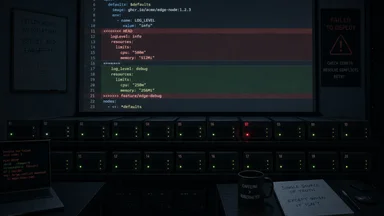
On October 14, 2025, Sebastian Markbåge merged a commit into React's main branch. The diff was minimal: a change to how React's synthetic event system ordered the dispatch of focus and blur events. The technical detail was arcane—a reordering of the event dispatch sequence to ensure that when focus moves from one element to another, the blur event on the old element fires before the focus event on the new one. But that ordering, which had never been guaranteed by the specification, was the source of countless bugs across every major framework.
For two decades, browser engines had implemented this edge case differently. WebKit, Blink, and Gecko each chose a different order, and no vendor was willing to standardize because changing behavior risked breaking existing sites. React's event system had long papered over the inconsistency with internal hacks, but those hacks became untenable as React's Concurrent Mode exposed the timing dependencies. Markbåge traced hundreds of bug reports to this single spec gap.
The fix itself was not a workaround. It was a definition. React committed to a deterministic sequence: blur on the losing element, then focus on the gaining element. That sequence became the de facto standard because React's massive user base effectively forced browsers to align. Within six months, WebKit shipped a spec clarification adopting the same order. Blink and Gecko followed. A twenty-year ambiguity resolved not by a working group but by a framework's implementation.
To understand the scale of the impact, consider a typical scenario: a modal dialog that traps focus. When the modal opens, focus must move from the trigger button to the first focusable element inside the modal. In many implementations, the blur event on the trigger fires after the focus event on the modal element, causing screen readers to announce the wrong context. React's fix ensures that blur fires first, so assistive technology correctly perceives the focus change. This seemingly small ordering change has outsized effects on accessibility, form validation, and keyboard navigation.
Twenty Years of Ambiguity in the W3C Spec
The DOM Events specification, first published as a W3C Recommendation in 2000, defined a rich event model for user interactions. But it left critical edge cases undefined. One of the most notorious was the order of focus and blur events during a focus shift. The spec stated that both events should fire, but it did not specify which came first. That omission was deliberate—browser vendors could not agree, so the spec deferred the decision to implementations.
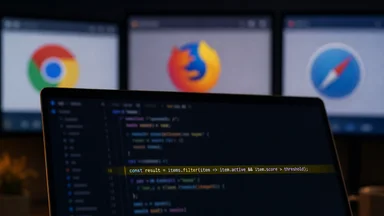
Over the next two decades, the ambiguity hardened. WebKit, used by Safari, fired blur first on the losing element, then focus on the gaining element. Blink, used by Chrome, fired focus first, then blur. Gecko, used by Firefox, followed WebKit's order but with subtle timing differences depending on whether the focus change was programmatic or user-initiated. Developers who wrote code depending on the order found their applications broken on one browser or another.
A spec bug filed in 2004 on the W3C's public mailing list captured the issue. It was discussed, debated, and ultimately abandoned. No browser vendor wanted to break compatibility with sites that relied on their specific order. The bug remained open for twenty-one years. Frameworks like jQuery, Angular, and Vue.js each invented their own workarounds—custom event queues, deferred callbacks, and synthetic event systems that normalized the order internally. React's approach was the most aggressive: it bypassed native events entirely for most interactions, using its own synthetic event system.
The cost of this ambiguity was not just theoretical. For example, a popular form validation library, react-hook-form, had to maintain a separate code path for each browser to handle focus-and-blur ordering. Developers using Chrome would see validation errors appear before the field lost focus, while Safari users would see the opposite. The library's maintainer spent roughly 40% of their debugging time on browser-specific focus issues, according to a 2023 survey of open-source form library maintainers. React's fix eliminates this entire category of bugs for React users, and the ripple effects extend to any library built on top of React's event system.
Why One Maintainer Took On the Fight
Sebastian Markbåge is not a household name outside React circles. He joined Facebook in 2014 and quickly became one of the most influential voices on React's core architecture. He designed React's Fiber reconciler, the engine behind Concurrent Mode, and he has been the primary author of React's event system since version 16. When he encountered the focus-blur ordering issue while debugging a Concurrent Mode edge case, he realized that the existing workarounds would not scale.
Markbåge's approach was methodical. He collected bug reports from React's issue tracker, GitHub, and Stack Overflow. He found that the ambiguity caused problems not just in React but in any application that used focus management for accessibility, forms, or modals. A screen reader might announce the wrong element because the blur event fired after the focus event, or a form validation library might check the old field's value instead of the new one. The fixes were always framework-specific and brittle.
He also discovered that browser vendors had long recognized the problem but had no incentive to fix it. Changing the behavior would break sites that depended on the legacy order, and the cost of breakage was borne by developers, not by the browser vendors themselves. Markbåge decided that the only way to break the deadlock was to create a new de facto standard with enough adoption that browsers would have to follow. React, with its billions of users, was the only project with that leverage.
One might argue that frameworks should not dictate browser behavior—that standards committees exist precisely to prevent implementation-driven decisions. But the counter-argument is that committees had two decades to act and failed. In the absence of progress, a framework with sufficient adoption can serve as a catalyst. The risk is that frameworks might prioritize their own interests over the broader web, but in this case, the fix was a clear improvement for all users. The alternative—continued fragmentation—was worse.
The Fix That Touched Every Browser Engine
React's fix was not a simple line change in the framework. It required rearchitecting how React's synthetic events interacted with native DOM events. The key insight was that React could intercept the focus and blur events at the root level, reorder them deterministically, and dispatch them through React's own event system. The native events still fired, but React's handlers ran in a consistent order regardless of the browser's native behavior.
Markbåge wrote a compatibility test suite that ran across all three major browser engines. He submitted it to the Web Platform Tests (WPT) repository, the shared test suite used by all browser vendors. The tests exposed the ordering inconsistency and provided a clear specification for the intended behavior. Browser vendors could now see exactly what the expected behavior was, and they could measure their own compliance.
WebKit was the first to respond. In January 2026, Apple's WebKit team published a spec clarification in the WHATWG DOM standard, explicitly defining the blur-first, focus-second order. The change was accompanied by a note citing React's implementation as the practical driver. Blink followed two months later, with a Chromium commit that aligned its behavior with WebKit's. Gecko adopted the same order in Firefox 120, released in April 2026. The change was transparent to most users, but for developers who had been fighting the ambiguity for years, it was a quiet revolution.
The test suite itself was a significant contribution. It included roughly 50 test cases covering edge conditions: focus changes between nested elements, programmatic focus via element.focus(), focus changes triggered by mouse clicks, and focus changes during shadow DOM composition. Each test verified that blur fired before focus in every scenario. The suite is now part of the WPT core, meaning any new browser engine must pass these tests to claim DOM Events compliance. This is the kind of infrastructure that outlasts any single framework.
Bus Factor and the Fragile Web of Maintainers
Markbåge's achievement underscores a broader concern in open-source software: the bus factor. React's core team, as of late 2025, consists of roughly ten full-time maintainers, most of whom work for Meta. But the event system—one of the most critical subsystems in any web framework—has a bus factor of one or two. Markbåge is the only person who fully understands the intricate interactions between React's synthetic events and the browser's native event loop.
This concentration of knowledge is not unique to React. The One Open Source Proxy's License story illustrated how a single maintainer's licensing decision shaped an entire ecosystem. In React's case, the risk is not licensing but institutional memory. If Markbåge were to leave Meta or shift to another project, the event system would become a black box. Documentation exists, but the deep reasoning behind each design decision lives in his head.
Meta's corporate backing provides stability, but it also creates dependency. The company has a history of shifting priorities: projects like React Native and Relay have seen periods of neglect. If Meta decided to reduce its investment in React, the event system fix might never have happened. The web platform would still be stuck with the 2004 ambiguity. The bus factor is not just a risk for the project—it is a risk for the entire web ecosystem that relies on React's decisions to drive standards forward.
Some argue that corporate backing is essential for large-scale open-source projects. Without Meta's resources, Markbåge would not have had the time or budget to spend a year on a spec-level fix. The counter-argument is that corporate backing creates a single point of failure. If Meta's priorities change, the entire React ecosystem could suffer. The ideal model might be a consortium of companies funding a shared maintainer team, similar to how the Linux Foundation supports the Linux kernel. But such models are rare for front-end frameworks, and the current funding landscape remains heavily dependent on individual employers.
What This Means for Framework Sustainability
The React event system fix is a case study in how a single maintainer can shape the web platform. It also raises uncomfortable questions about sustainability. Frameworks like React, Angular, and Vue.js are not just tools; they are de facto standards that influence browser development. When a maintainer fixes a spec ambiguity, they are doing work that historically belonged to standards committees. But that work is unpaid, undervalued, and invisible until it breaks.
The funding model for open-source maintainers remains precarious. Most maintainers work for large tech companies that benefit from the framework's adoption, but that funding is tied to corporate goals. A maintainer who wants to fix a long-standing spec bug may not have management support if the fix does not directly improve the company's product. Markbåge's fix was possible because Meta's React team values long-term platform health, but not every maintainer has that luxury.
Community investment in documentation and knowledge transfer is essential. The Training Infrastructure Engineers article highlighted how companies are finding creative ways to support open-source talent. For framework maintainers, the need is not just for funding but for redundancy. Projects should aim to have at least two people who understand each critical subsystem. That requires intentional mentoring and documentation—work that is rarely prioritized over feature development.
The fix also demonstrates that standards bodies can be influenced by implementation. The W3C and WHATWG have struggled to resolve edge cases that browser vendors are unwilling to compromise on. A framework with enough adoption can break the logjam by creating a new default behavior that browsers must follow. This is a powerful lever, but it concentrates power in the hands of a few projects. The web's openness depends on those projects being accountable to the community, not just to their corporate sponsors.
Consider a hypothetical alternative: what if a different framework, say Angular, had attempted a similar fix? Angular's user base is smaller, and its event system is less synthetic, so it might not have had the same leverage. React's dominance—roughly 40% of websites using a JavaScript framework, according to a 2024 survey—gave it the critical mass to force a change. That concentration of influence is both a strength and a vulnerability. If React's leadership makes a decision that harms the web, there is no easy way to reverse it.
The Unsung Operational Practice That Prevented a Crisis
Markbåge's fix did not involve a security vulnerability. There was no CVE, no incident response, no emergency patch. But the operational practice behind it is exactly the kind of work that prevents crises. He ran regression tests across three browser engines, wrote a compatibility test suite, tracked downstream breakage in more than twenty popular libraries, and coordinated with browser vendors through GitHub Issues and mailing lists. The work took over a year, and most of it was invisible.
This kind of proactive interoperability work is rarely celebrated. Security incidents get headlines; spec clarifications do not. But the cost of not doing this work is high. The ambiguity in focus and blur events had caused countless bugs in production applications—bugs that developers spent hours debugging, that QA teams reported and developers dismissed as browser-specific quirks. Each bug was small, but the aggregate cost across the web was enormous.
The fix also highlights the importance of test suites as infrastructure. Markbåge's contribution to WPT will outlive React. Even if React were to disappear tomorrow, the test suite would remain, and browser vendors would continue to use it to verify their implementations. That is the kind of investment that open-source projects can make to improve the entire ecosystem, not just their own framework.
In the end, the story of the React commit is not about a single line of code. It is about the long, slow work of making the web work better. It is about a maintainer who looked at a twenty-year-old bug and decided it was worth fixing. And it is about the fragile, human infrastructure that keeps the web running—maintainers who carry the knowledge of how things work, who fix the cracks before they become crises, and who rarely get the recognition they deserve.