One Late Merge Conflict Took an Edge Deployment Team Into a Twenty-Node Rollback

On a Friday afternoon in late 2025, a robotics startup near Georgia Tech's campus watched its entire edge deployment fleet stumble into safe mode. Twenty nodes—each running real-time sensor fusion for autonomous warehouse vehicles—began dropping off the network within minutes. The root cause: a single merge conflict in a shared configuration file, resolved incorrectly by a junior engineer who had not been trained on conflict resolution. The incident triggered a 90-minute fleet-wide rollback, cost roughly 40 engineering-hours of debugging, and delayed a customer demo by two days.
This is not a story about a catastrophic bug or a flawed algorithm. It is a story about process—about how a routine Git workflow, a CI pipeline that only ran unit tests, and a lack of staging hardware turned a small mistake into a costly outage. For any team shipping code to edge devices, the lessons are pointed and uncomfortable.
A Merge Conflict That Cascaded into a Fleet-Wide Rollback
The startup, which I will call EdgeWare (not its real name), had built a fleet of twenty edge nodes deployed in a warehouse environment. Each node ran a sensor fusion stack that combined LiDAR, radar, and camera data to guide autonomous pallet movers. The nodes communicated with each other over a meshed network to coordinate movements and avoid collisions. The software stack was updated weekly via a Git-based pipeline. On that Friday, a junior engineer on the perception team had been working on a branch for two days, tuning parameters in a shared YAML config file that assigned unique device IDs to each node.
The config file was deceptively simple: a mapping from node hostnames to numeric IDs, used by the inter-node communication layer to route messages. Four teams—perception, planning, controls, and infrastructure—made changes to this file regularly. The file had no schema validation, no integration tests, and no mandatory code review for internal tooling changes. It was considered too trivial to need process.
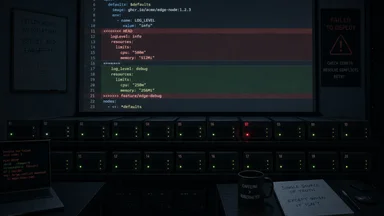
When the junior engineer merged the latest main branch into his feature branch on Friday morning, Git reported a conflict in the config file. Two teams had added new device ID entries on overlapping lines. The engineer, working alone and under time pressure to ship before the weekend, used Git's auto-resolve feature. Auto-resolve chose the wrong side of the conflict, keeping only the IDs from his branch and discarding the IDs added by the planning team earlier that week. The merged file passed all unit tests—because there were no unit tests for config file correctness. The engineer pushed the merge to main, and the CI pipeline triggered a deployment to the entire fleet.
The Git Workflow That Made It Possible
EdgeWare's Git workflow was typical for a small startup: a single main branch with daily merges from four teams. There was no mandatory code review for changes to internal tooling or configuration files—only for core algorithm changes. The CI pipeline compiled the code, ran unit tests on the perception and planning modules, and built a container image. It did not run integration tests against a staging environment. The team had discussed building a staging rack with a few edge nodes, but hardware procurement was slow and the warehouse deployment was considered low-risk.
The merge conflict itself was introduced 48 hours before the rollback, when the planning team added a new device ID for a node that had been reassigned to a different zone. The perception team, working on a separate branch, had also added an ID for a new node being tested. When the junior engineer merged main into his branch, the conflict spanned four lines in the YAML file. The auto-resolve algorithm—a simple three-way merge—chose to keep only the IDs from the engineer's branch, because those lines had been modified more recently in his branch's history. Git does not understand application semantics; it only sees text.
The engineer later told the post-mortem team that he had seen the conflict warning, but had assumed auto-resolve would handle it correctly. He had never been trained on manual conflict resolution for YAML files, and the team had no documented procedure for handling conflicts in shared config files. The CI system did not flag the conflict, because it had been resolved before the merge commit. By the time the deployment reached the fleet, the damage was done.
How One Config File Took Down Twenty Nodes
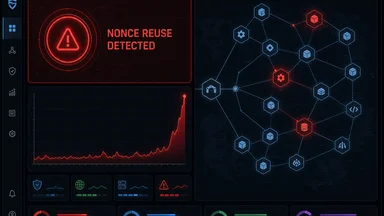
The deployment rolled out to all twenty nodes simultaneously via a Kubernetes-style orchestration layer. Within minutes, nodes began reporting communication failures. The inter-node messaging layer, which relied on unique device IDs to route packets, started seeing duplicate IDs. Two nodes now shared the same ID, causing packets to be misrouted or dropped. The sensor fusion algorithms on each node, which depended on receiving data from all other nodes, began to stall. One by one, nodes entered a safe mode—shutting down non-critical processes and logging errors—to prevent collisions between autonomous vehicles.
The monitoring system fired alerts after three nodes dropped offline. The on-call engineer initially suspected a network issue, but a quick check showed the mesh network was healthy. The team spent the next 30 minutes trying to correlate logs across nodes, but the duplicate ID did not appear in any single log file. It was only after a full rollback to the previous deployment that the config file diff revealed the missing entries. The root cause was identified roughly 90 minutes after the first alert.
The fleet downtime was not catastrophic—the warehouse was running a reduced schedule that weekend—but the customer demo, scheduled for the following Monday, had to be postponed. The startup's CEO had to explain the delay to an investor who was visiting for the demo. The incident cost roughly 40 engineering-hours of debugging, triage, and post-mortem writing, not counting the lost demo opportunity.
The Post-Mortem: What the Team Found
The post-mortem meeting, held three days later, was tense. The junior engineer was visibly shaken; he had nearly quit over the incident, believing he had caused irreparable harm. The team's lead engineer made a point to emphasize that the process was at fault, not the individual. The findings were stark: the merge conflict had been introduced 48 hours before the rollback, but no one noticed because CI passed on the merged branch. The config file had no schema validation—any value could be written to any field. The team had no staging environment for edge hardware, so the config had never been tested on real nodes before the fleet-wide rollout.
The team also discovered that the Git auto-resolve had chosen the wrong side of the conflict because the engineer's branch had been rebased more recently, causing Git to treat his version as the "newer" one. A manual resolution would have kept both sets of IDs. The team realized that no one had ever trained the junior engineer on how to resolve conflicts manually, nor had the team documented a protocol for handling config file conflicts. The incident was a classic case of process debt—the accumulation of small procedural gaps that eventually compound into a crisis.
One of the senior engineers noted that similar incidents had happened before, but on a smaller scale. A few months earlier, a config file change had caused a single node to fail, and the team had simply reverted the change without investigating the root cause. That near-miss had not prompted any process changes. The post-mortem concluded with a list of tooling fixes, but the team also acknowledged that the hardest changes were cultural: convincing engineers that config files were as critical as source code.
Tooling Fixes That Prevent a Repeat
The team implemented four concrete changes in the weeks following the incident. First, they made two-person review mandatory for all config file changes. This was not a popular decision—it added friction to what had been a fast-moving process—but the team agreed it was necessary. Second, they added schema validation to the CI pipeline for the config file. A simple JSON Schema file was checked into the repository, and the pipeline now rejected any config that did not conform. Third, they introduced integration tests that deployed the config to a single canary node before rolling out to the full fleet. The canary node was a spare edge device that sat in the office, running the same software stack as the warehouse nodes.
The fourth change was more technical: the team adopted structured merge drivers for YAML files. Git's default merge algorithm treats YAML as plain text, which is often incorrect for configuration files where the order of keys does not matter but the values must be preserved. A structured merge driver understands the YAML structure and can merge changes from different branches without dropping entries. The team used a custom merge driver built on top of the yaml Python library, which they contributed back to an open-source project. This change reduced the likelihood of future merge conflicts causing silent data loss.
They also added a Git pre-commit hook that flagged any merge conflict markers in YAML and JSON files, forcing the developer to manually resolve the conflict before committing. This hook caught two potential incidents in the first month after deployment. The team's lead engineer estimated that the total investment in these tooling changes was roughly 60 engineering-hours—about 1.5 times the cost of the original rollback. He argued that the investment would pay for itself if it prevented even one more similar incident.
Not everyone on the team was convinced. A few engineers felt that the mandatory code review for config changes would slow down development, especially during the pre-demo crunch period. They argued that the real problem was the lack of staging hardware, not the review process. The team compromised: config changes could be reviewed asynchronously, but at least one other engineer had to approve the change before it could be merged. The canary deployment was made mandatory only for changes that affected device IDs or network topology; other config changes could skip it if the author vouched for the risk.
The Hidden Cost of Late Merges
The incident cost more than engineering-hours and delayed demos. Team morale took a visible hit. The junior engineer, who had been passionate about robotics before the incident, became hesitant to push changes. He spent the next few weeks double-checking every merge with a senior engineer, adding latency to his workflow. The team's velocity dropped by an estimated 20% for the following sprint. The blame cycle—though officially discouraged—created an undercurrent of tension between the perception and planning teams, who had both added entries to the config file without communicating.
The CEO later told the team that the delayed demo cost the company a potential follow-on investment. The investor had been impressed by the technology but concerned about operational maturity. The incident became a case study in the company's internal training materials for new hires. The team's lead engineer wrote a public post-mortem on the company blog, which received a mix of sympathy and critique from the edge computing community. Some commenters argued that the team should have used a distributed configuration management system like etcd or Consul instead of a YAML file in Git. Others pointed out that the real mistake was deploying to all twenty nodes simultaneously without a canary.
The team considered migrating to a centralized config store but decided against it for now. The edge nodes operated in a disconnected-friendly mode—they could run for hours without internet access—and a centralized store would introduce a single point of failure. The YAML file in Git, despite its flaws, had the advantage of being version-controlled and deployable offline. The team chose to invest in tooling around the existing workflow rather than replace it wholesale. That decision reflected a pragmatic trade-off that many edge teams face: improve the process you have, or rebuild the system from scratch.
Lessons for Any Team Shipping to Edge Devices
Edge deployments amplify the consequences of process failures. A misconfig in a cloud service can be rolled back in seconds by redeploying a container; an edge misconfig may require a technician to physically visit each device. The EdgeWare incident offers four lessons that generalize beyond this single startup.
First, treat config files as code. They should be validated, tested, and reviewed with the same rigor as source code. Schema validation is cheap to implement and catches a class of errors that unit tests miss. Second, do not rely solely on unit tests for edge deployments. Unit tests validate that the code runs, but they do not validate that the system behaves correctly when config values change. Integration tests on real or simulated hardware are essential. Third, invest in a staging environment that mirrors production. The canary node that EdgeWare set up after the incident cost roughly US$ 2,000 in hardware—a small price compared to the cost of a fleet-wide rollback.
Fourth, train every engineer on conflict resolution. Git is a power tool that can cause serious damage when used incorrectly. A 30-minute training session on manual conflict resolution, with examples specific to your project's config files, can prevent incidents like this. Fifth, automate merge conflict detection for critical files. A pre-commit hook that rejects files with conflict markers is trivial to implement and provides a safety net for tired or distracted engineers.
The edge computing ecosystem is still young, and many teams are operating with workflows inherited from cloud-native development. Those workflows assume that mistakes can be fixed with a quick redeploy. On edge devices, that assumption is dangerous. The EdgeWare team learned this the hard way, but their post-mortem provides a roadmap for others to avoid the same pain. The next time you see a merge conflict in a config file, resist the urge to auto-resolve. Take the extra minute to understand what changed. Your edge fleet will thank you.