One 1968 Truth-in-Lending Rule That Now Hides a Loan’s True Cost in Late-Fee Fine Print

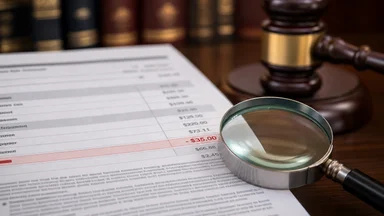
In 1968, the U.S. Congress passed the Truth in Lending Act with a straightforward promise: borrowers would see the real cost of credit before signing. Lenders had to disclose the annual percentage rate (APR) and total finance charges in a clear, uniform box. For a time, it worked. Consumers could compare a 12% car loan to a 14% one without parsing fine print. But the law carved out an exception that has since swallowed the rule. Late fees—those penalties charged when a payment arrives a day late—were classified as punitive, not part of the cost of credit. That classification let them evade the APR disclosure requirement entirely. Today, that loophole has grown into a multi-billion-dollar industry that hides the true cost of borrowing from millions of Americans.
This article traces the arc of that exception: how it was sold, how it was exploited, and who profits from the fog. It also examines the parallel universe of Buy Now Pay Later (BNPL) loans, which sidestep TILA altogether, and asks whether a simple regulatory fix could restore the transparency the 1968 law intended.
The 1968 Rule That Promised Honest Pricing
The Truth in Lending Act (TILA) was a response to a marketplace where lenders advertised monthly payments without revealing the underlying interest rates. A borrower might sign for a $3,000 car loan at 4% per month—an APR of 48%—without realizing it. TILA required lenders to express all credit costs as a single annual rate and a dollar amount, both prominently displayed.
The law's architects understood that small fees could mask large costs. Finance charges, defined broadly to include interest, origination fees, and certain other charges, had to be folded into the APR. But late fees were explicitly excluded. The reasoning, as explained in congressional committee reports, was that late fees were penalties for breaking a contract, not a cost of using credit. They were meant to deter delinquency, not to generate revenue.
That distinction might have held if late fees remained modest. But by the 1990s, card issuers had raised late fees well above the cost of processing a missed payment. A 1996 Supreme Court decision, Smiley v. Citibank, affirmed that late fees are part of the interest rate for national banks, preempting state caps. That opened the door for issuers to charge whatever the market would bear—and the market bore a lot.
Today, the median credit card late fee is roughly $30 for the first offense and $40 for repeat violations, according to Consumer Financial Protection Bureau data. For a cardholder with a $1,000 balance, a $40 late fee represents a 4% charge on top of any interest. But none of that cost appears in the APR disclosure on the monthly statement.
How Late Fees Became a Hidden Profit Center
Credit card issuers now collect an estimated $12 billion annually in late fees, according to the CFPB's 2023 report on the subject. That figure exceeds the total fee income from annual membership fees and cash-advance fees combined. For the largest issuers, late fees account for roughly 10% of total revenue.
The business model is simple: issue cards to consumers who are likely to occasionally miss a payment, set the late fee high enough to exceed the cost of funds, and rely on the fact that the fee is not factored into the advertised APR. A card advertised as 22% APR can easily impose an effective annual cost of 35% or more on a customer who pays late just once every few months.
Critics argue this distorts competition. A lender that charges a low APR but a high late fee can appear cheaper than a lender with a moderate APR and no late fee, even if the total cost to the typical borrower is higher. The CFPB's 2023 report noted that late fees are “often higher than the cost of processing a late payment, and they are not transparent to consumers when they choose a credit card.”
Industry groups counter that late fees are necessary to cover losses from defaults and to encourage on-time payment. They point out that most cardholders never pay a late fee, and that capping fees would force issuers to raise annual fees or interest rates for everyone. But the CFPB found that the largest issuers set late fees at exactly the safe harbor amounts—$30 and $41—regardless of their actual costs, which suggests pricing based on regulatory limits rather than expense.
Buy Now Pay Later Repeats the Pattern
If the late-fee loophole distorts credit card pricing, the Buy Now Pay Later (BNPL) model essentially erases disclosure entirely. BNPL loans, offered by companies like Affirm, Klarna, and Afterpay, split a purchase into four interest-free installments. They typically do not report to credit bureaus and are not subject to TILA's disclosure requirements, because they are structured as short-term loans with no interest—unless the borrower misses a payment.
When a BNPL payment is late, fees can be steep. Some lenders charge a flat fee of $7 to $10 per missed installment, but others impose a percentage of the purchase amount. A 2022 study by the Consumer Financial Protection Bureau found that late fees on BNPL loans can be as high as 25% of the purchase price—far more than the typical credit card late fee as a share of the balance. Yet because BNPL loans are not considered “credit” under TILA, no APR is disclosed.
The United Kingdom recently moved to close this gap. As of 2026, the Financial Conduct Authority now requires BNPL lenders to be authorized and to provide refunds and rejections for unaffordable loans, as reported by the BBC. But in the United States, regulation remains piecemeal. A handful of states have imposed disclosure requirements, but there is no federal standard.
Consumer advocates argue that BNPL should be treated as credit and that late fees should be included in a total cost calculation. The industry warns that heavy regulation could stifle innovation and reduce access to short-term credit for consumers who lack credit cards. Without a uniform rule, borrowers are left to guess the true cost of a missed payment.
Credit Reporting Amplifies the Damage
Late fees do not just cost money; they can also damage credit scores. When a payment is more than 30 days late, credit card issuers and BNPL lenders may report the delinquency to credit bureaus. A single missed payment can drop a good credit score by 50 to 100 points, depending on the scoring model. That drop, in turn, raises the cost of future credit—car loans, mortgages, even insurance premiums.
The Fair Credit Reporting Act gives consumers the right to dispute inaccurate information on their credit reports, but it offers no remedy for accurate late payments triggered by a fee the borrower did not anticipate. A borrower who pays the balance in full but misses the payment because they were waiting for a paycheck may still be marked as delinquent.
Payday lenders and subprime auto lenders actively market to consumers with late-payment marks on their credit files. These lenders charge APRs that can exceed 300%, and they often require borrowers to provide access to their bank accounts or car titles as collateral. A late fee that triggers a credit score drop can thus set off a chain reaction of increasingly expensive borrowing.
Some credit unions have experimented with “second-chance” checking accounts and secured credit cards that do not penalize late fees as harshly, but these products are not widely available. The link between late fees and credit reporting remains one of the least transparent aspects of consumer credit.
The Cost to Consumers: A Closer Look at Real-World Scenarios
To understand the real impact, consider a few concrete examples. A consumer with a $2,000 credit card balance at an advertised APR of 18% who misses a payment by one day incurs a $40 late fee. If that fee is added to the balance, the effective cost for that month jumps from roughly $30 in interest to $70—a 133% increase in the cost of carrying that debt for the month. Over a year, if the consumer is late just twice, the total cost rises from about $360 in interest to $440, pushing the effective APR above 22%.
For a BNPL user, the math can be even starker. Suppose a borrower uses a BNPL service to purchase a $200 item, splitting it into four $50 installments. If they miss one installment, a late fee of $10 is charged. That $10 fee on a $50 payment represents a 20% charge for that installment. If the borrower misses two installments, the total fees can approach 25% of the original purchase price—equivalent to an APR of well over 100% if annualized. Yet the borrower sees no APR disclosure at checkout.
These scenarios are not hypothetical. The CFPB's 2022 report on BNPL found that about 10% of BNPL users incurred late fees, and that the average fee per late payment was around $7. For frequent users, those fees can accumulate quickly, especially when combined with the lack of credit reporting that might otherwise limit borrowing.
Who Benefits from the Fine-Print Fog
The beneficiaries of the late-fee loophole are concentrated in the financial sector. Large banks and card issuers earn fee income that is not subject to interest-rate caps. Debt-collection firms profit from accounts that are charged off after repeated late fees. Credit bureaus sell the data generated by late-payment reporting to lenders who then use it to target high-fee products.
Industry lobbying has been effective in blocking reform. The CFPB proposed a rule in early 2024 that would cap late fees at $8 for the largest card issuers, a move that the bureau estimated would save consumers $10 billion annually. The rule faced immediate legal challenges from banking trade groups, which argued that the CFPB lacked authority to set fee caps and that the rule would reduce competition.
Congress has not updated TILA to address the late-fee loophole since 2009, when the Credit Card Accountability Responsibility and Disclosure (CARD) Act imposed some limits on rate increases. That law restricted retroactive rate hikes and required issuers to apply payments to higher-interest balances first, but it left late fees untouched.
Consumer groups, including the National Consumer Law Center and the Center for Responsible Lending, have pushed for an “all-in APR” standard that would include late fees, overdraft fees, and other penalties in the annual percentage rate calculation. They argue that this would give borrowers a single, comparable number that reflects the true cost of credit. The banking industry counters that such a standard would be misleading, because late fees are avoidable and should not be averaged into the cost for all borrowers.
The Trade-Offs of Reform: Who Gains and Who Loses?
Any reform to the late-fee loophole involves trade-offs. Proponents of an all-in APR argue it would empower consumers to make informed choices, potentially driving down fees as lenders compete on total cost. For example, if a lender had to disclose an APR that included expected late fees, a consumer could compare a card with a 22% APR and no late fee to one with a 20% APR and a $40 late fee, and see that the latter might be more expensive if they are likely to be late.
Opponents warn that an all-in APR could penalize responsible borrowers who never pay late. If lenders are forced to average late fees into the APR for all customers, they might raise the base APR to cover the risk, meaning that punctual payers subsidize those who are late. This could lead to higher costs for the majority of cardholders who pay on time. The industry argues that the current system, where late fees are charged only to those who trigger them, is fairer.
There is also the question of enforcement. The CFPB's proposed $8 cap on late fees for large issuers is a simpler approach, but it does not address BNPL or other lending products. Moreover, it could lead issuers to raise other fees—such as annual fees or balance transfer fees—to compensate for lost late-fee revenue. A 2023 study by the Federal Reserve Bank of Philadelphia found that when late fees were capped in some states, issuers increased annual fees by an average of about $5, partially offsetting the savings for consumers.
Another trade-off involves credit access. Industry groups argue that capping late fees could reduce the availability of credit for subprime borrowers, who are more likely to miss payments. If issuers cannot charge high late fees to cover the risk, they might tighten lending standards or reduce credit limits for higher-risk consumers. Consumer advocates counter that such borrowers are already harmed by the current system, and that transparent pricing would allow them to better manage their debt.
What a True Cost Disclosure Would Look Like
Imagine a credit card statement that showed not just the APR on purchases, but also a “worst-case APR” that assumed the borrower paid late once every six months. That figure would include late fees and any associated penalty rate increases. A card with a 22% purchase APR and a $40 late fee on a $1,000 balance would have a worst-case APR of roughly 30%. A BNPL loan with a 25% late fee on a $200 purchase would have an effective APR of more than 100% if the borrower missed one payment.
Some credit unions already disclose total cost voluntarily. For example, a few offer “no-fee” credit cards that charge no late fee at all, instead adjusting the interest rate for delinquent accounts. These products are transparent by design, but they remain niche because the largest issuers have no incentive to adopt them.
The CFPB’s proposed late-fee rule, though not yet finalized, would require issuers to justify fees higher than $8 based on actual costs. That rule could reduce the opacity of late fees, but it would not address the broader issue of hidden costs in BNPL or other short-term lending.
A more comprehensive fix would require all lenders—including BNPL providers—to disclose a “total cost of credit” that includes late fees, using a standardized format. The UK’s new BNPL authorization regime offers a model. But in the U.S., any such reform would face fierce opposition from an industry that earns billions from the current fog.
The 1968 Truth in Lending Act was a landmark of consumer protection. But its exception for late fees has turned a promise of transparency into a facade. Until that loophole is closed, the true cost of borrowing will remain hidden in fine print that few borrowers ever read.
Disclaimer: This article is for informational purposes only and does not constitute financial, legal, or professional advice. Readers should consult a qualified professional for advice tailored to their individual circumstances.